St Thomas Mount, Chennai

St Thomas Mount, Chennai

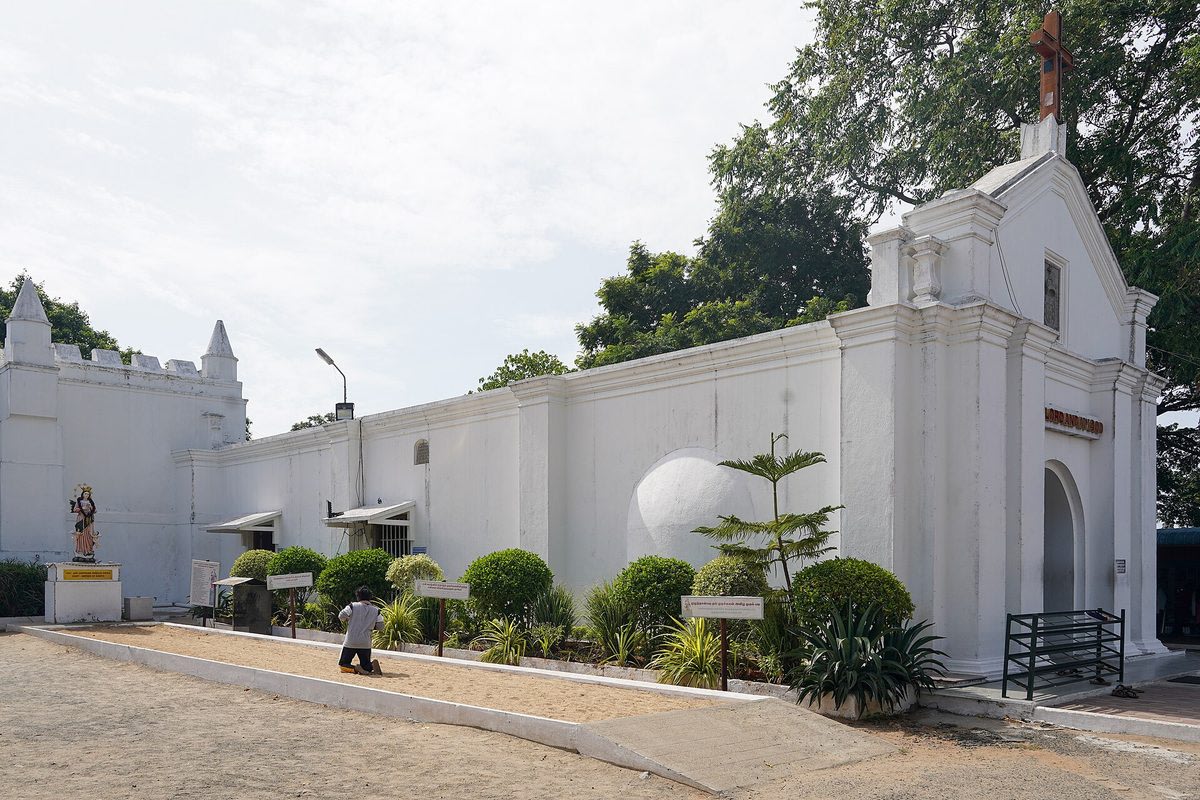
St Thomas Mount, Chennai is the site where the Apostle was martyred in Chennai. It was proclaimed a National Shrine on 8th January, 2011 by the Vatican.

Type
Church
Country
India
Location
Parangi Malai, St Thomas Mount, Chennai Tamil Nadu 600016
Scroll
01At a Glance

Designated as one of only three National Shrines in India, St Thomas Mount has a long history dating back to when the Apostle himself was martyred at this spot in 72 AD. After landing at Muziris on the west coast of India, St Thomas made his way eastward and continued his evangelisation in Mylapore, Chennai. Little Mount, a part of St Thomas Mount, Chennai, where a humble cave exists on the hillside is believed to have been the hermitage of the Apostle. According to the local tradition, St Thomas was confronted in this very cave by his assailants. He escaped to the hill using another opening, where he was killed by a lance while clutching a stone cross that he himself had carved. Centuries passed, by which time the Portuguese had established a significant presence in many parts of India. In 1523, they built a shrine dedicated to Our Lady of Expectation atop the 300 foot high St Thomas Mount. An arch inside the church is inscribed with its title in Portuguese, ‘Senhora da Expectacao’ and indicating 1523 as its year of construction. Around the year 1547, while excavating the premises to build a new church, the Portuguese unearthed the stone cross carved by St Thomas. It bore inscriptions in old Sassanid Pahlavi which befuddled scholars for centuries. Finally, in 1908 after years of debate the inscription was deciphered to mean ‘Through the Cross, the Messiah brought salvation to the world’. St Thomas Mount is a shrine that holds timeless treasures. Foremost among them is a painting of the Madonna of the Blessed Virgin painted by St Luke the Evangelist, himself. That Luke was a gifted artist is borne out by the popularity of the painting almost 2000 years later. This was the painting that St Thomas brought with him to India and carried everywhere his travels took him. The first reference to this painting is made in 1559, when the King of Bisnaga took it to his court in Chandragiri. It was returned to the shrine, carried back on a palanquin to the mountain top. A framed oil painting of St Thomas being pierced with a lance from behind in his praying posture is displayed prominently near the high altar. Besides, there are huge framed paintings of the Apostles with Jesus and of St Paul which add to the many pieces of art that the shrine holds. A fragment of the Bone of St Thomas is placed in an ornamental casket and is a prized relic that occupies pride of place in the shrine. Pilgrims make it a point to venerate this Holy Relic, which is reputed to have miraculous powers. The ancient Church on the top of St Thomas Mount has served as the light house for the Portuguese and Armenian vessels that traversed through the Bay of Bengal in the 16th and 17th centuries. It was a practice for sailors in those days to offer prayers for a safe voyage to St Thomas, and then fire a salutation from the ships cannons. In later years, the facade of the chapel was extended and massive wooden doors were added to the entrance. An inscription on the outer wall in Portuguese reads ‘Ordered to be done by Zacharias in the year 1707’. A beautiful arch adds a touch of beauty to the entrance, bearing the year of its construction to be 1726. Madras, as Chennai was earlier known, was home to a thriving community of Armenian merchants. Many of them were generous benefactors of the Catholic Church in the city. Petrus Uscan, a wealthy Armenian merchant built a brick paved road interspersed with granite steps to the top of St Thomas Mount. He also left a sum of money with the authorities towards the upkeep of these steps. Acknowledging the importance of the holy site to the Roman Catholic Church, Pope John Paul II visited the pilgrimage site on February 5, 1986, during his visit to India. St Thomas Mount, Chennai was proclaimed as a National Shrine on 8th January, 2011 by the Vatican.

1

Designated as one of only three National Shrines in India, St Thomas Mount has a long history dating back to when the Apostle himself was martyred at this spot in 72 AD

2

Little Mount, a part of St Thomas Mount, Chennai, where a humble cave exists on the hillside is believed to have been the hermitage of the Apostle

3

Centuries passed, by which time the Portuguese had established a significant presence in many parts of India

4

In 1523, they built a shrine dedicated to Our Lady of Expectation atop the 300 foot high St Thomas Mount

5

The first reference to this painting is made in 1559, when the King of Bisnaga took it to his court in Chandragiri

02Plan Your Visit
Getting There
National Shrine Church, St Thomas Mount, Chennai, Tamil Nadu 600016

St Thomas Mount is adjacent to Chennai Airport. From Meenambakkam / Chennai Airport: 5 minutes by auto. From Chennai Central: 30 minutes by suburban train to St Thomas Mount station (Suburban railway). Well connected to the airport.

Open in Google Maps →
IST (UTC+5:30)
--:--:--

The climb to the summit — 134 steps — is part of the pilgrimage. The view from the summit is one of the best in Chennai. Combine with the Santhome Cathedral Basilica (20 km away) for the full St Thomas pilgrimage in Chennai.

Opening Hours
Church and Mount6:00 AM - 8:00 PM daily
03Must See

What to seek out, and why it matters

I
At the top of the 134 steps

The Summit and the Martyrdom Site

The 134 steps up St Thomas Mount — each step a moment of the Apostle's story — lead to the summit where he was martyred. The church at the top, the view of the Chennai plain, and the knowledge of what happened here 2,000 years ago combine into one of the most powerful pilgrimage moments in India. The airport below — planes taking off over the mount where the Apostle died — is an image of the world the Church has been trying to reach ever since.

II
Inside the summit church

The Bleeding Cross

The Bleeding Cross of St Thomas Mount — a stone crucifix said to have sweated blood when discovered by the Portuguese in 1523 — is the central relic of the shrine. The cross predates the Portuguese church; it is believed to have been carved by Thomas himself or his early disciples. It is venerated with the same intensity as the tomb in Santhome.

III
Below the summit church

St Thomas's Cave

The cave where Thomas is said to have prayed and hidden — a small hollow in the rock face — is one of the most intimate spaces of the Thomas pilgrimage in Chennai. The cave is the place of prayer before the martyrdom: the Apostle in his contemplative descent before his violent ascent to martyrdom.

IV
Looking across Chennai

The View from the Summit

The view from the summit of St Thomas Mount — 90 metres above the Chennai plain, with the airport, the coastline, and the city stretching in all directions — is one of the most dramatic views in south India. The Apostle died here with this view. The city that grew up around and below his martyrdom site is one of the largest in India.

V
The 134 steps

The Pilgrimage Climb

The climb to the summit of St Thomas Mount — 134 steps, each carrying pilgrims up to the martyrdom site — is itself a form of prayer. Many pilgrims climb barefoot or in silence. The physical effort of the climb is a participation in the ascent of the one who died at the top.

04Masses & Events
Daily Mass7:00 AM at the summit church

Morning Mass at the martyrdom site

Feast of St ThomasJuly 3

The principal feast

December 21Traditional feast day

The traditional date of Thomas's martyrdom

5Reflection & Prayer

Thomas climbed this hill to pray. He was killed on it. The hill became a shrine. The shrine became a national sacred site. The Apostle who went furthest — who crossed the most cultural and geographical distance of any of the twelve — died on a 90-metre hillock on the south Indian plain, looking out over what would become one of India's greatest cities. The planes from Chennai Airport fly over the mount on departure. They go where Thomas went: east and south and everywhere. The Apostle of India is the patron of every Indian who gets on a plane and goes somewhere difficult to live.

2 Timothy 4:7

I have fought the good fight, I have finished the race, I have kept the faith.

Read in full on Bible Gateway →
A Pilgrim's Prayer

I have fought the good fight. Thomas fought it here, on this hill, in this city, at the end of the earth. I am at the place where the race was finished and the faith was kept. Let me, in my own much smaller arena, fight the same good fight. Finish my race. Keep the faith — whatever it costs, to whatever end. Amen.

06More

Designated as one of only three National Shrines in India, St Thomas Mount has a long history dating back to when the Apostle himself was martyred at this spot in 72 AD.

The Martyrdom of St Thomas

After landing at Muziris on the west coast of India, St Thomas made his way eastward and continued his evangelisation in Mylapore, Chennai. Little Mount, a part of St Thomas Mount, where a humble cave exists on the hillside, is believed to have been the hermitage of the Apostle. According to local tradition, St Thomas was confronted in this very cave by his assailants. He escaped to the hill using another opening, where he was killed by a lance while clutching a stone cross that he himself had carved.

The Portuguese and the Stone Cross

Centuries passed, by which time the Portuguese had established a significant presence in many parts of India. In 1523, they built a shrine dedicated to Our Lady of Expectation atop the 300-foot-high St Thomas Mount. An arch inside the church is inscribed with its title in Portuguese, ‘Senhora da Expectação’, indicating 1523 as its year of construction. Around the year 1547, while excavating the premises to build a new church, the Portuguese unearthed the stone cross carved by St Thomas. It bore inscriptions in old Sassanid Pahlavi, which befuddled scholars for centuries. Finally, in 1908, after years of debate, the inscription was deciphered to mean ‘Through the Cross, the Messiah brought salvation to the world’.

Timeless Treasures

St Thomas Mount is a shrine that holds timeless treasures. Foremost among them is a painting of the Madonna of the Blessed Virgin, painted by St Luke the Evangelist himself. That Luke was a gifted artist is borne out by the popularity of the painting almost 2,000 years later. This was the painting that St Thomas brought with him to India and carried everywhere his travels took him. The first reference to this painting is made in 1559, when the King of Bisnaga took it to his court in Chandragiri. It was returned to the shrine, carried back on a palanquin to the mountain top.

A framed oil painting of St Thomas being pierced with a lance from behind in his praying posture is displayed prominently near the high altar. Besides, there are huge framed paintings of the Apostles with Jesus, and of St Paul, which add to the many pieces of art that the shrine holds. A fragment of the bone of St Thomas is placed in an ornamental casket and is a prized relic that occupies pride of place in the shrine. Pilgrims make it a point to venerate this Holy Relic, which is reputed to have miraculous powers.

A Lighthouse for Sailors

The ancient church on the top of St Thomas Mount served as a lighthouse for the Portuguese and Armenian vessels that traversed the Bay of Bengal in the 16th and 17th centuries. It was a practice for sailors in those days to offer prayers for a safe voyage to St Thomas, and then fire a salutation from the ship’s cannons. In later years, the facade of the chapel was extended and massive wooden doors were added to the entrance. An inscription on the outer wall in Portuguese reads ‘Ordered to be done by Zacharias in the year 1707’. A beautiful arch adds a touch of beauty to the entrance, bearing the year of its construction as 1726.

The Armenian Benefactors

Madras, as Chennai was earlier known, was home to a thriving community of Armenian merchants. Many of them were generous benefactors of the Catholic Church in the city. Petrus Uscan, a wealthy Armenian merchant, built a brick-paved road interspersed with granite steps to the top of St Thomas Mount. He also left a sum of money with the authorities towards the upkeep of these steps.

A National Shrine

Acknowledging the importance of the holy site to the Roman Catholic Church, Pope John Paul II visited the pilgrimage site on 5 February 1986, during his visit to India. St Thomas Mount, Chennai, was proclaimed a National Shrine on 8 January 2011 by the Vatican.

Saints Associated With This Site
Part of this pilgrimage
13-day pilgrimage · Chennai — St Thomas sites
India — St Thomas Trail
View itinerary →
More from India
Church of St John the Evangelist (Afghan Church), Mumbai
Shahid Bhagat Singh Road, Navy Nagar, Colaba
All Saints Cathedral, Allahabad
Sarojini Naidu Marg, Civil Lines, Prayagraj (Allahabad)
Archdioceasan Heritage Museum, Mumbai
Archdiocesan Heritage Museum, St Pius X College, Aarey Road
Basilica of Bom Jesus, Goa
Basilica of Bom Jesus, Old Goa Road, Bainguinim